
Specialist Children’s Dentistry
Preparation Video for Parents
 This video is available in Vietnamese, Dari, Burmese, Arabic and Chin Hakha
Preparation Video for Children
This video is available in Vietnamese, Dari, Burmese, Arabic and Chin Hakha
First Visit
At the first visit the clinician will:
- Gather a detailed medical, dental and social history
- Assess your child’s ability to undertake dental care with different strategies such as behaviour support, sedation or general anaesthesia.
- Complete an examination
- Undertake further assessments as indicated (eg radiographs “x-rays")
- Make appropriate referrals if required
- Formulate a treatment plan with you.
There is no treatment at the first visit
You will have had an examination or “check up” with your local dentist or oral health therapist, this is not the same as the specialist assessment.
Bring any items of comfort for your child or teenagers visit, this may be a special blanket or soft toy or items for sensory management such as noise cancelling headphones
Taking photos
If you do not think your child will be able to cooperate for an examination it is recommended to try and take photos before you come. This allows you to take photos at home in a more comfortable environment when it will suit you and your child or teenager best.
Take photos at a time of day they are most cooperative, maybe use a reward for encouragement.
Take photos with good lighting, if poor light then images can be blurry and hard to assess. Try your best and it may take several attempts.
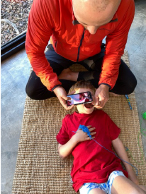
Please do not email any photos to us. If we need a copy we will provide you with an encrypted link via Etray to provide them to ensure your privacy.
- Turn the flash on (not auto)
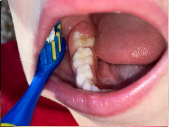
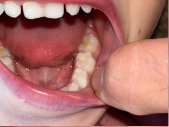
- Use fingers, handle of spoon or toothbrush to retract lips and cheeks
- Make sure focus is on the teeth and any other areas you’d like us to see or ask about
- You may need to try different positions to get the photos, we’d suggest sitting behind them like the image above. A second person may be helpful to retract the lips
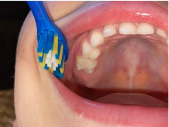
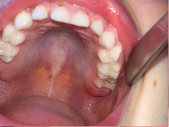
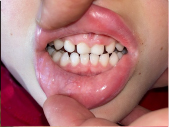
Take a photo of each area of the back of the mouth (top left and right, bottom left and right) and of the front teeth.
Tips for managing anxiety
Parental anxiety influences child’s anxiety. If you are feeling anxious before your child’s appointment it’s important you prepare yourself before preparing your child.
Preparing yourself
- Practice relaxation techniques
- Project calmness even if it’s not how you feel. Children pick up on the clenched fist or tight smile, feelings spread silently.
- Consider if the other parent would be a better person to attend the appointment.
- Ask the dentist any questions you have at the consultation appointment to prepare yourself for the next appointment
- Don’t tell stories of your own negative experiences
- Never use going to the dentist as a threat
Preparing your child
- Watch the videos above
- Role play at home or read books or social stories
- Avoid language that invokes fear, “pain, “needle”, “injection” “rip out teeth”
- Avoid language that is aimed at being positive but said in negative way, eg “It won’t hurt” as this might make your child anticipate pain which can make them feel non painful things as pain. Use non emotive or positive language.
- Be truthful but keep it simple, if children are lied to the trust will be lost
During the appointment
- Stay calm and reassuring. If you don't think you can ask your dentist for tips how to help make the appointment more successful.
- Allow the dentist to lead the conversation with your child and be a presence without speaking.
- Bring any comfort items such as a soft toy or blanket or items for sensory management such as earphones
After the appointment
- Celebrate any achievements with praise and rewards
- Focus on what went well, or what they did well, children learn best when focusing on positives rather than what didn’t go well.
Completion of Treatment
Once your active dental care has been completed you will be referred back to your local dentist or oral health therapist for ongoing dental checks and care. We do not routinely review patients in our clinic after active treatment has been completed unless you are unable to access routine care elsewhere.